

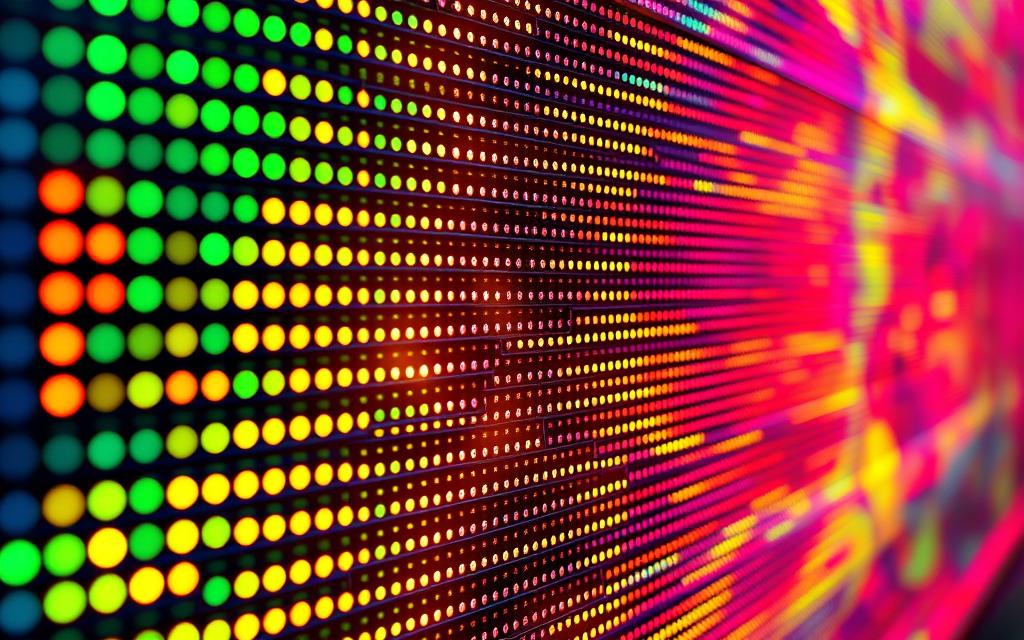
Imagine a display where every pixel is a tiny light source. This new technology is changing how we see things.
It started in 2000 by Hongxing Jiang and Jingyu Lin. They created arrays of microscopic LEDs for amazing images. Each tiny diode acts as a pixel, controlling brightness and colour.
This technology is better than LCD or OLED screens. It has the good parts without their bad sides.
It gives us better contrast, deeper blacks, and wider views. This is a big step up in display technology, making things clearer and more real.
Let’s dive into this new tech. You’ll see why it’s seen as the future of high-end displays. It’s set to change everything from gadgets to professional setups.
Understanding Micro LED Display Technology
Micro LED technology is a new way to make screens. It’s different from old screen technologies. It uses tiny light-emitting diodes to show bright, clear images.
The Fundamental Principles of Micro LED Technology
Micro LED tech uses special materials, not the usual ones. These tiny LEDs are smaller than 100 micrometres. You can’t see them with your eyes.
It uses III-V and III-N materials for better performance. These materials are more stable than what OLEDs use. This makes micro LED displays last longer.
Related Posts:
- How Much Money Does the Technology Industry Make…
- Is Technology a Curse or a Blessing Weighing the Impact

- How Technology Innovations Are Transforming Policing…

- How Technology Will Change Accounting AI Automation…

- How Technology Has Improved Agriculture Precision Farming

- Is Contemporary Amperex Technology Publicly Traded…
Each pixel in a micro LED display lights up on its own. This means no backlight is needed. This leads to deeper blacks and better contrast.
Key Components and Architecture of Micro LED Displays
Micro LED displays have many parts working together. They control each tiny light source precisely.
Microscopic LED Arrays and Their Structure
The core of a micro LED display is its tiny LED array. It has red, green, and blue LEDs to show colours.
These LEDs are placed with great care. The materials used are strong and last longer than others.
Key features include:
- Precision spacing between LEDs
- Uniform size distribution
- Good thermal management
- High light extraction efficiency
Drive Electronics and Control Systems
The drive electronics are vital in micro LED systems. They control the power to each tiny LED.
The control systems manage millions of pixels at once. They use smart algorithms for colour and brightness.
Key functions include:
- Pulse-width modulation for brightness
- Real-time pixel monitoring
- Power management
- Error correction
For more information on micro LED technology, there are detailed resources available.
The mix of tiny LED arrays and smart control systems makes displays perform well. This is why micro LED is often compared to OLED.
How Micro LED Technology Works
Micro LED displays work differently than old display tech. They don’t need backlighting like LCDs or organic materials like OLEDs. Instead, they use inorganic semiconductors for their amazing performance.
The Emissive Nature of Micro LED Pixels
Each Micro LED pixel is its own light source. This means no need for colour filters or extra lights. It lets us control each pixel perfectly, giving us true blacks and high contrast.
These tiny LEDs are made of inorganic materials. This makes them very stable and long-lasting. This is a big reason why Micro LED displays are so good and reliable.
Manufacturing Processes and Assembly Techniques
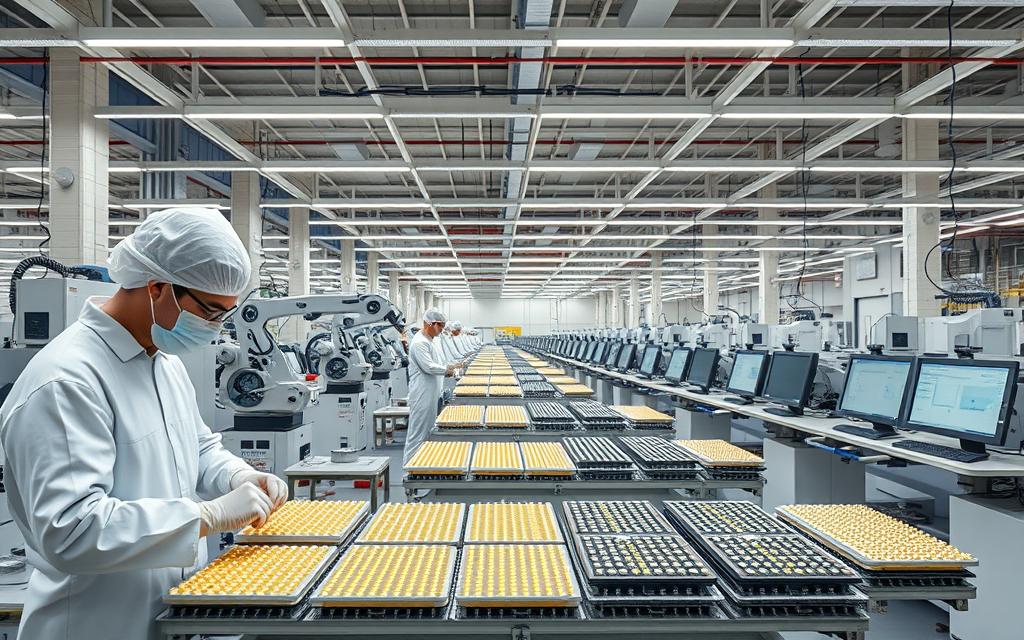
Making Micro LED displays is a complex task. It involves working at a very small scale. It needs a lot of precision to handle thousands of tiny LEDs at once.
Special assembly methods are used to place and connect each LED. This is a big achievement in tech, but it’s also a challenge to do on a large scale.
Mass Transfer Technology for Micro LED Placement
Mass transfer tech is key in making Micro LED displays. It picks and places thousands of LEDs at once. This is done with special equipment that’s very accurate.
This tech makes sure all LEDs are in the right place. It’s essential for making displays with lots of pixels.
Bonding and Interconnection Methods
There are different ways to bond LEDs to their substrate. The flip-chip method works well for small displays, like in VR headsets. It’s very effective.
Reflow ovens are used to bond LEDs to silicon substrates. They keep the temperature just right. This makes sure the connections are strong without harming the LEDs.
By using advanced placement and bonding, we can make displays with high pixel density. This is what makes Micro LED technology so good and reliable.
Advantages of Micro LED Over Conventional Display Technologies
Micro LED technology is a big step up in display quality. It offers better performance in many areas than LCD and OLED displays. This is thanks to Micro LED’s unique features and how it’s made.
Superior Image Quality and Performance Characteristics
Micro LED displays have unmatched visual quality. They provide viewing experiences that are far better than traditional displays in several key areas.
Exceptional Brightness and Contrast Ratios
Micro LED displays are incredibly bright, often hitting 5,000 nits or more. This is about five times brighter than most OLED displays. They have true pixel-level control, which means each pixel can turn off completely when showing black.
This leads to almost endless contrast ratios. It results in deeper blacks and more vivid images than any other display tech today.
Micro LED displays show colours with amazing precision and consistency. They cover over 100% of the DCI-P3 colour space and have near-perfect colour accuracy. This wide colour gamut ensures content looks exactly as creators meant it to, making Micro LED perfect for professional use where colour accuracy is key. Questions about micro led next also connect with innovations transforming policing predictive when readers compare closely related topics.
The technology also keeps colour consistent across the whole display. This avoids colour shifting problems found in other display types.
Energy Efficiency and Environmental Benefits
Micro LED displays use significantly less power than LCD technology. This is due to several factors in the micro led manufacturing process and its design.
Key energy-saving features include:
- No backlight systems needed in LCD displays
- Precise pixel control without power waste
- Higher light conversion efficiency from electrical energy to visible light
These improvements mean lower operating costs and less environmental impact over the display’s life.
Durability and Longevity Advantages
Micro LED technology’s inorganic nature offers big durability benefits over organic-based displays like OLED. Micro LEDs don’t suffer from burn-in issues that can affect OLED displays after long use.
They also resist environmental factors like humidity and temperature changes better. This ensures consistent performance over time and extends the display’s lifespan.
Micro LED displays keep their performance characteristics over their life. They show little to no degradation in brightness or colour accuracy even after years of use.
Micro LED Versus OLED and QLED Technologies
When looking at top display options, we face a complex world of different technologies. Micro LED stands out from OLED and QLED because of its unique mix of performance and material benefits.
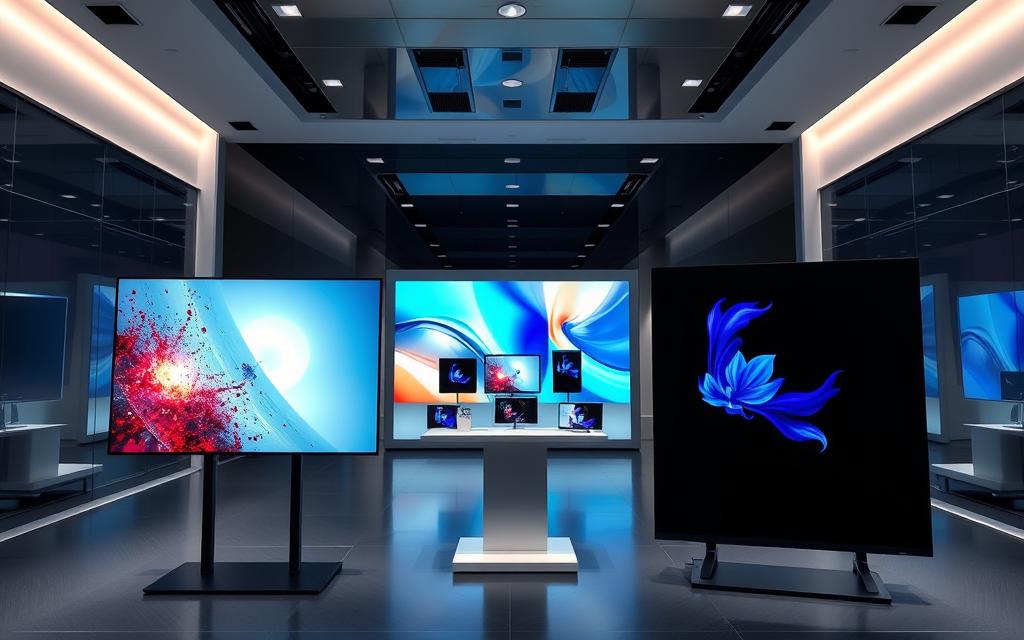
Technical Comparison: Micro LED vs OLED Displays
Micro LED and OLED differ mainly in what they’re made of. Micro LED uses inorganic semiconductors, while OLED uses organic compounds. This leads to big differences in how they perform and last.
Burn-in Resistance and Pixel Degradation
Micro LED doesn’t have the burn-in problems that OLED does. Its inorganic pixels stay strong for thousands of hours. OLED’s organic parts start to break down, causing permanent image retention.
This makes Micro LED great for static content. It’s perfect for control rooms, digital signs, and professional editing suites.
Response Times and Motion Handling
Micro LED has response times under a nanosecond, way faster than OLED’s millisecond times. This quick pixel switching gets rid of motion blur in fast scenes.
On Micro LED, sports, action movies, and games look super sharp. It handles quick scene changes without any artefacts or trailing effects.
Performance Differences: Micro LED vs QLED Technology
QLED boosts LCD panels with quantum dot filters. It’s good for colours, but can’t beat Micro LED’s contrast.
Micro LED gives perfect blacks with pixel control. QLED uses backlighting that doesn’t get true blacks. Micro LED also keeps colours accurate at any angle.
The table below shows key differences:
| Feature | Micro LED | QLED | OLED |
|---|---|---|---|
| Contrast Ratio | ∞:1 (Perfect Black) | 6,000:1 | ∞:1 (Perfect Black) |
| Response Time | 2-8 milliseconds | 0.1-1 millisecond | |
| Peak Brightness | 5,000+ nits | 2,000-3,000 nits | 800-1,000 nits |
| Burn-in Risk | None | None | High |
| Colour Volume | 125% DCI-P3 | 100% DCI-P3 | 98% DCI-P3 |
Market Positioning and Consumer Choice Considerations
Each tech has its own spot in the market. OLED is top for TVs with great contrast at good prices. QLED is strong in the mid-range with bright, colourful screens.
Micro LED is for the high-end where top performance is key. It’s super bright, making it great for tough micro led applications.
Micro LED is also great for augmented reality systems. It can handle direct sunlight, which is key for these displays. Other uses include medical imaging and car displays.
As costs drop, more people will choose Micro LED. Early users want the best performance, even if it costs more. Its long life and energy saving make it worth the extra money.
Manufacturing Challenges and Technological Hurdles
Micro LED technology is set to change display screens, but it faces big hurdles to become widely used. These obstacles block the way from lab tests to products ready for sale.
Production Complexities and Yield Issues
Making Micro LED displays needs incredible precision at tiny scales. Each LED must be tested carefully before being put together. This makes the process very complex.
To fix any faulty LEDs, special lasers are used. This slow process makes making displays take a long time.
For a typical phone screen, just the mass transfer step can take up to 18 days. This makes making lots of screens very hard.
Even small problems can make a whole display unusable. To fix this, companies are working hard to improve their testing methods.
Cost Barriers and Economic Viability
The detailed making process makes Micro LED displays very expensive. This high price makes them hard to sell.
Several things make them so pricey:
- Specialised equipment needed
- Long making times
- Expensive materials
- Complicated putting together
These costs affect everyone in the Micro LED market. Making them cheaper than other tech is a big challenge.
Current Research and Development Focus Areas
More than 130 companies are working on Micro LED tech. They’re focusing on a few key areas.
Improving how to move tiny LEDs around is a big focus. Scientists are looking for ways to do this faster and more accurately.
New ways to make displays are also being explored. These could make making displays much more efficient.
Testing methods are also being improved. This is to spot problems early and reduce waste. It will also help make more displays.
Everyone is working together to solve these problems. Success in these areas will decide if Micro LED tech will be a hit in the market.
Current Applications and Market Implementation
Micro LED technology has moved from lab tests to real products. Now, many companies sell consumer items with this tech. This shows what it can do today and its future in the market.
Commercial Products Featuring Micro LED Technology
Big names in electronics have brought Micro LED displays to market. They focus on high-end products where quality is key. These products highlight the tech’s strengths and prove it’s worth the cost.
Samsung’s Micro LED Television Offerings
Samsung’s “The Wall” is a big step forward in display tech. It uses tiny LEDs in modules to make big, seamless screens. This method lets you choose screen sizes and shapes for luxury homes or business use.
This tech looks like wall tiles made of tiny lights. It’s great for custom screens in fancy homes or offices.
Specialised Display Applications and Professional Use
Micro LED tech is also used in professional settings. It’s perfect for places where top quality is needed. This shows how it works well in real life.
Places like control rooms, studios, and medical areas use Micro LED for its colour and reliability. Digital signs in fancy shops and offices also benefit from its brightness and toughness.
Emerging Market Segments and Adoption Patterns
The Micro LED market is growing, moving beyond just high-end products. At CES 2024, we saw new uses like transparent and flexible displays. This shows where the tech is headed.
Grand View Research says more people will use Micro LED soon. It’s moving from ultra-premium to more affordable options. This is happening faster thanks to better manufacturing.
New areas like car screens, wearables, and AR devices are next for Micro LED. These uses take advantage of its efficiency, toughness, and design. It’s not just for screens anymore.
The current use of Micro LED gives us a peek into its micro led future. It shows us what it can do now and what it might do in the future across many fields.
Conclusion
Micro LED technology is a huge step forward in display innovation. It offers unmatched micro led performance, beating all current display tech. It shines brightly, has perfect blacks, and uses energy very efficiently. This means you get the best viewing experience and it lasts a long time.
Even though making Micro LED is hard and expensive now, the market is expected to grow fast. Market Research Future says the Micro LED display market will hit about USD 24.3 billion by 2027. Custom Market Insights predicts an even bigger USD 182.7 billion by 2032. Readers exploring micro led next often end up considering intel speed shift dynamic as part of the same topic. These numbers show how big of a change Micro LED can make once the making process gets better.
Micro LED’s future is bright, with uses in augmented reality, flexible screens, and more. As making it gets easier and cheaper, it will change how we see things in many fields. This new display tech is set to be the top choice for high-quality viewing in the next ten years.